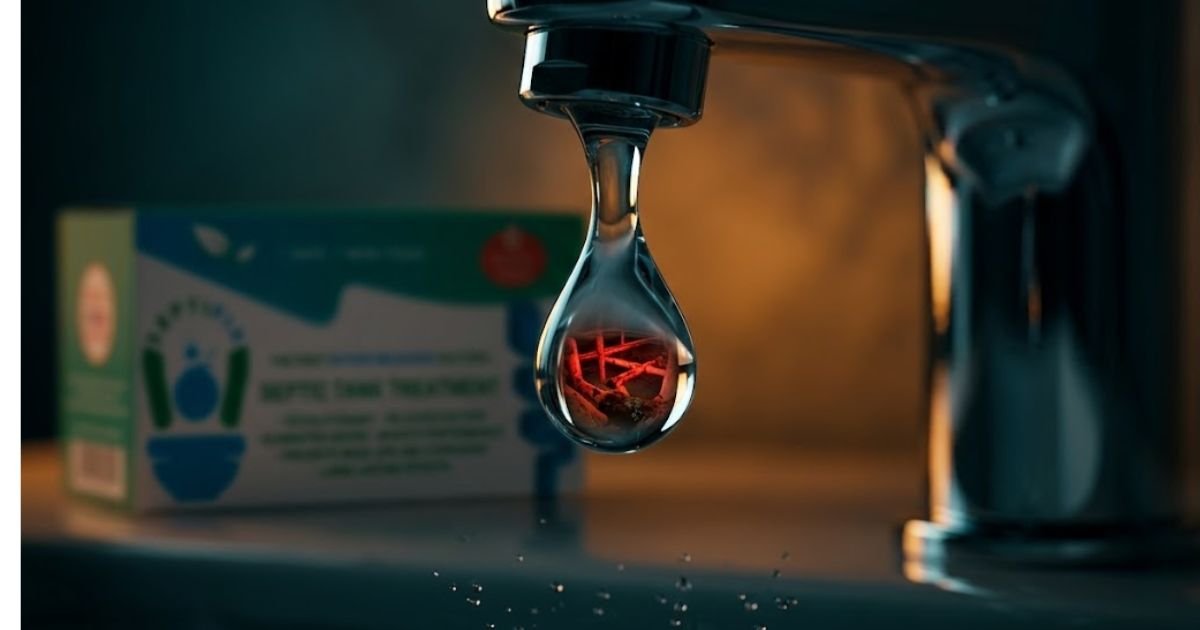
You’re probably asking yourself: Is Septifix worth the money?
If so, you already know that specific, sinking feeling. Gurgle. Hiss. That split second where your stomach drops. You own a house on a septic system, which means you carry a low-grade, background anxiety that the average suburban homeowner just doesn’t have. Every time the guest toilet drains a little slow, or a faint, sulfurous whisper drifts up from the kitchen sink, your brain starts doing the math.
And the math is terrifying.
You’re staring at a monthly subscription for Septifix, and your wallet is screaming. Fifty bucks a month? It feels like a bleed. But then you remember the alternative. Let’s look at the brutal, unforgiving reality of septic tank economics and figure out if this biological treatment is a genuine lifeline or just an expensive placebo.. If you want to skip the guesswork, you can check the official Septifix website for current pricing and availability here.
The True Cost of Septic Ownership: A Financial Reality Check
To understand what you’re actually buying, we have to quantify the financial gravity of a failing system. Most people only think about their septic tank when something goes wrong. By then, the financial damage is already compounding.
Septifix Pricing vs. Professional Pump-Out Frequencies
Let’s establish the baseline. The EPA recommends pumping your tank every 3 to 5 years. In 2026, with municipal waste disposal fees and labor costs climbing, you’re looking at $450 to $750 just to get the heavy truck in your driveway. Spread that out, and you’re paying about $120 to $150 a year in annualized maintenance.
Now look at Septifix. A month’s supply runs you about $50 to $60. Suddenly, dropping $600 a year on a pill feels like a 400% markup. It feels like a rip-off.
But that’s a trap. It’s a false equivalence.
Septifix isn’t trying to replace the pump truck. It’s trying to make the pump truck obsolete. By continuously eating through the solid waste and liquefying the sludge, people using this stuff are stretching their pump-out intervals from three years to five, seven, sometimes ten. When you factor in the deferred cost of that heavy machinery, the “premium” vanishes. You aren’t paying for a pump-out anymore. You’re paying to cancel it. .You aren’t paying for a pump-out anymore. You’re paying to cancel it. See how much you can save on your next septic pump-out with Septifix here.
The $15,000 Threat: Septic Drain Field Replacement Costs
Pumping the tank is just the cover charge. The real financial nightmare lives underground. It’s the drain field.
When your tank gets choked with solids, or the biology gets out of whack, a thick, tar-like scum called a biomat forms in the leach field. It seals up the soil pores. The water stops percolating. It has nowhere to go. So, it comes back up into your yard, or worse, back into your basement.
You can’t clean a dead leach field. You have to rip it out and replace it.
In 2026, tearing up your yard to install a new drain field will cost you between $10,000 and $15,000. If you have bad soil or need heavy engineering, you’re staring down a $25,000 bill.
This is where the psychology shifts. Septifix at $600 a year isn’t a monthly bill. It’s an asymmetric insurance policy. You’re paying a predictable, manageable micro-cost to completely dodge a catastrophic, unpredictable macro-cost. The question isn’t whether Septifix is too expensive. It’s whether you can comfortably gamble $15,000 on the chance that it doesn’t work.
The Mechanics of Value: How Septifix Alters Septic Economics
Financial logic only holds up if the engine actually runs. If Septifix is just chalk and hype, the math is irrelevant. So, let’s crack open the tank and look at the biology.
Aerobic vs. Anaerobic Bacteria: The Biological ROI
A standard septic tank is an anaerobic environment. There’s no oxygen down there. The bacteria that survive in that dark, stagnant water are sluggish. They digest waste at a glacial pace, and as a byproduct, they burp out hydrogen sulfide gas. That’s the rotten egg smell that makes your eyes water.
Septifix flips the script. As the tablet dissolves, it releases oxygen into the water. This invites aerobic bacteria to the party.
Why does oxygen matter? Because aerobic bacteria are ravenous. They consume organic waste, fats, oils, and grease up to 30 times faster than anaerobic strains. They are the biological heavyweights. Plus, aerobic digestion doesn’t produce that foul gas. By shifting the tank’s ecosystem, Septifix drives massive sludge reduction, keeping the solid levels low enough to save your drain field, while quietly neutralizing the odor. That’s the biological ROI: faster destruction equals a longer lifespan for your system.”Industry experts at NOWRA recommend biological treatments to extend the life of conventional septic systems.”
Breaking Down the Septifix Ingredient Profile & Concentration
People love to roll their eyes at “septic pills,” assuming it’s just a few generic enzymes sprinkled into a binder. But if you tear down the Septifix ingredient profile, you’re looking at a highly engineered, multi-tiered payload.
First, the sheer volume. Septifix packs 64 billion CFUs (Colony Forming Units) into a single tablet. Most of the big-box store alternatives offer a fraction of that. You need that massive concentration because your septic tank is a hostile, acidic, chemical-heavy environment. The bugs need overwhelming numbers just to survive and colonize.
Then there’s the strain diversity. It’s not just about having a lot of bugs; it’s about having the right bugs. Septifix uses a proprietary blend of Bacillus strains specifically bred to chew through cellulose, proteins, and complex lipids.
But the real hidden hero? The corrosion inhibitors. Anaerobic bacteria produce sulfuric acid, which literally eats the concrete in your tank and rusts the metal baffles. Septifix includes specialized pH balancers that neutralize these acids. You aren’t just buying bacteria. You’re buying a biological and chemical shield for your physical infrastructure.
The Final Verdict: Is Septifix Worth the Money?
Look, whether this is a genius investment or a waste of cash depends entirely on your household’s specific load. Here is the conditional breakdown.
The “Worth It” Matrix: Who Should Buy and Who Should Skip
You should absolutely buy Septifix if:
- You run a garbage disposal. Grinding up food waste supercharges sludge buildup. You need those aggressive aerobic bugs to break down the complex organics.
- You have a crowded house (4+ people). More bodies mean more water and waste, stressing the system. Septifix acts as a biological buffer.
- Your system is aging, or you’ve noticed the drains getting lazy. The corrosion inhibitors and deep sludge digestion will help breathe life back into an older setup.
- You are sick of the smell. Switching to aerobic digestion permanently shuts down the hydrogen sulfide production.
…In the brutal economics of septic tank ownership, you either pay a little bit every month to maintain the system, or you pay a fortune every decade to replace it. Click here to get the official Septifix tablets backed by a 100% money-back guarantee.”
You should skip it and save your money if:
- You’re hooked up to city sewer. Septifix is strictly for septic and holding tanks.
- Your tank is physically broken. If the concrete is cracked or the roots have crushed the pipes, bacteria won’t fix structural damage. Call a plumber.
- You’re flushing harsh chemicals down the toilet. If you’re constantly pouring bleach, heavy degreasers, or antibacterial soaps down the drain, you’ll just kill the Septifix bacteria on contact.
Maximizing Your Investment: The Optimal Dosing & Maintenance Schedule
If you’re going to use it, use it right.
- Dial in the dose. For a standard 1,000-gallon tank, one tablet a month is plenty. If you’re pushing 1,500 to 2,000 gallons, or you’re heavy on the garbage disposal, bump it to two or three. Don’t overdo it. More pills don’t mean faster results; it just means wasted money.
- Watch your water. The bacteria need time to sit in the tank and eat. If you run three loads of laundry back-to-back, you’re flushing the water—and the bacteria—straight into the drain field before they can do their job. Spread out your water usage.
- Respect the biology. Switch to septic-safe cleaners. Use biodegradable toilet paper. Stop pouring bacon grease down the sink. Protect the ecosystem you just paid to install.
Will I actually see a difference, or does it take forever?
You’ll usually notice the smell dropping and the drains speeding up within the first week. But the deep sludge eating—the stuff that actually extends your pump-out schedule—takes about a month or two of steady use.
I’ve been using harsh chemical cleaners for years. Can I just start dropping these in?
You really shouldn’t. Those chemicals will just kill the bacteria. It’s best to pump the tank, flush the system, and stop the harsh chemicals before you start Septifix.
Is this going to fix my completely failed drain field?
If your drain field is just sluggish and clogged with biomat, Septifix can help eat through that scum and restore the flow. But if the field is physically collapsed or crushed by tree roots, no pill on earth is going to fix it.
Products / Tools / Resources
Septifix Monthly Supply
The primary aerobic bacteria treatment we broke down in this review. If you’re dealing with odors, slow drains, or just want to push back your next pump-out date, this is the biological engine you need.
Kamera Septic Tank Inspection Camera
If you want to actually see what’s going on inside your tank without paying a pro to drop a snake down the pipe, this waterproof camera saves you a massive headache.
Scott Rapid-Dissolving Toilet Paper
Because no biological treatment on earth can out-work cheap, thick-ply paper that refuses to break down. Switching to septic-safe paper is the easiest way to protect your investment.
Green Gobbler Grease Digester
A great companion product for the kitchen sink. If you have a garbage disposal and want to keep the fats, oils, and grease (FOG) out of your main tank before it even gets there, keep a tub of this under the sink.
Septifix Official Supply: The primary aerobic bacteria treatment we broke down in this review. If you’re dealing with odors, slow drains, or just want to push back your next pump-out date, this is the biological engine you need. Get your monthly supply directly from the official store here.