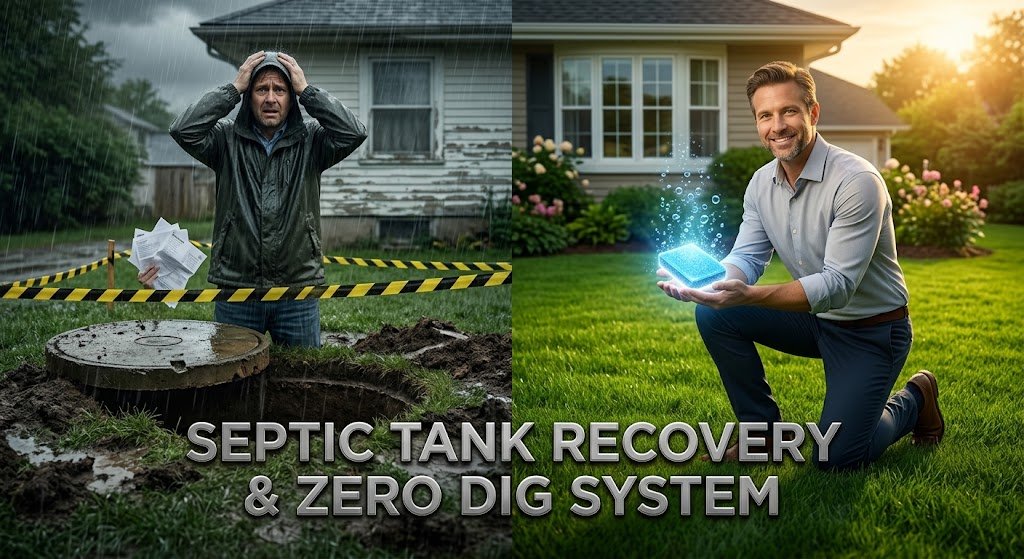
How to Revive a Failing Septic. Few household discoveries bring on the cold, sinking dread quite like a failing septic system. It usually starts with quiet clues—a faint, hollow gurgle in the bathroom pipes when the washing machine drains, or a strange, persistent whiff of sewer gas drifting past the back porch. But left alone, those subtle hints can quickly spiral into an absolute homeowner nightmare: raw sewage backing up into your basement shower, and a fleet of heavy excavators tearing your manicured lawn into a muddy trench.
The knee-jerk reaction for most people is sheer panic, immediately followed by financial vertigo. Replacing a ruined drain field can easily drain your bank account by $5,000 to $15,000, leaving behind a scarred yard and months of stress. Visit Official Septifix Website
Here is the relief: replacing the entire system is rarely your only option. Most of the time, a sluggish, backing-up septic tank isn’t structurally broken—it’s biologically dead. When you understand how to revive the delicate microbial ecosystem living under your lawn, you can break through compacted sludge, open up a choked drain field, and reverse a system breakdown without digging up an inch of dirt.
Recognizing the Early Warning Signs of Septic System Failure
A septic system almost never drops dead out of nowhere. It drops subtle diagnostic breadcrumbs long before sewage ever creeps into your living space. Catching these early warnings gives you the window you need to fix the issue biologically before things get catastrophic. How to Revive a Failing Septic
Slow Drains, Gurgling Toilets, and Odor Traps in the Yard
The very first signs of trouble show up right at your sinks and toilets:
- Sinks Draining in Stuttering Stages: When water pools around the drain, pauses, and then slowly spirals down, your tank is struggling to accept incoming liquid volume because its overall water levels are dangerously high.
- Acoustic Gurgling in the Pipes: That strange bubbling sound coming from your toilet after a shower happens because trapped sewer gas is being forced backward up the line. It means your main inlet pipe is partially submerged under trapped sludge.
- Yard Odor Traps: If you catch smells resembling rotten eggs or heavy methane around the tank lid or leach field, your tank’s anaerobic bacteria are failing to digest volatile organic compounds (VOCs).
The Danger Zone: When a Clogged Drain Field Turns Catastrophic
When wastewater stops soaking into the soil, your system hits a critical flashpoint. The underlying culprit is almost always biomat buildup—a dense, rubbery, waterproof layer formed by dead bacteria, undigested organic matter, and trapped grease that glues the soil pores shut along your leach lines.
[ Household Wastewater ] ➔ [ Septic Tank (Anaerobic Settlement) ]
                                      │
                                      ▼
[ Clogged Drain Field ] ◄── (Biomat Layer Seals Soil Pores)
          │
          ├─► Warning Sign 1: Spongy, hyper-green grass over leach lines
          ├─► Warning Sign 2: Pooled surface water (sewage effluence)
          └─► Critical State: Reverse flow back into home fixtures
Once biomat seals off the drain field, effluent has nowhere to go. It forces its way upward, creating soggy, uncomfortably lush patches of grass directly above your trenches, or worse, it flows backward into your lowest home drains.
Why Chemical Drain Cleaners Destroy Your Septic Ecosystem
When drains slow down to a crawl, the instinct is to grab a bottle of harsh chemical drain opener and pour it down the pipe. In an off-grid septic setup, this is about the most damaging thing you can possibly do.
The Hidden Damage of Bleach and Harsh Antibacterial Soaps
Your septic tank isn’t just a waste box under the ground; it’s a carefully balanced bio-reactor. Millions of beneficial bacteria work around the clock, digesting solid waste and turning heavy organic matter into liquid effluent, carbon dioxide, and clear water.
| Chemical Agent | Primary Use Case | Impact on Septic Microflora | System Consequence |
| Sodium Hypochlorite (Bleach) | Surface Disinfection | Wipes out beneficial bacterial colonies on contact | Halts waste digestion; causes fast sludge buildup |
| Lye / Caustic Soda | Unclogging Pipes | Destroys pH balance; chemically eats at concrete | Turns tank fats into a soap-like sludge (Saponification) |
| Quaternary Ammonium | Antibacterial Soaps | Shuts down enzyme production across key strains | Stops the breakdown of tough proteins and starches |
Preserving Beneficial Bacteria vs. Killing Tank Microflora
Chemical drain cleaners offer a temporary band-aid at the sink trap while causing a massive disaster inside the tank. When those caustic chemicals hit the reservoir:
- They wipe out massive colonies of waste-digesting bacteria in seconds.
- Undigested toilet paper, grease, and solid waste float straight past the liquid layer toward the exit pipe.
- Raw, un-decomposed debris flows directly into the drain field, plugging up soil pores, accelerating biomat growth, and triggering total system failure.
If you want to clear a clog without ruining your system, you need to swap out chemical poisons for bio-oxygenation and targeted enzymatic breakdown.
Step-by-Step Guide: Using Septifix Tablets for Maximum Tank Rejuvenation
Unlike basic powders or liquid enzymes that simply wash away, Septifix uses a slow-release oxygenation mechanism. As the tablet dissolves at the bottom of your tank, it releases up to 10 liters of pure oxygen per tablet while introducing 14 distinct strains of aerobic bacteria. This turns a sluggish, foul-smelling anaerobic tank into a high-speed aerobic decomposition engine.
Dosage Calculations Based on Tank Capacity (Gallon-to-Tablet Ratios)
To completely reset your tank’s biological engine, get your dosage right based on your total liquid capacity:
+------------------------+--------------------------+----------------------------+
| Tank Capacity (Gallon) | Emergency Shock Dosage   | Monthly Maintenance Dose   |
+------------------------+--------------------------+----------------------------+
| 500 – 1,000 Gallons    | 3 Tablets (Single Flush) | 1 Tablet / Month           |
| 1,000 – 1,500 Gallons  | 4 Tablets (Single Flush) | 1 to 2 Tablets / Month     |
| 1,500+ Gallons         | 5 Tablets (Single Flush) | 2 Tablets / Month          |
+------------------------+--------------------------+----------------------------+
Note: If water is actively backing up or your yard smells strongly of raw sewage, use the full Emergency Shock Dosage immediately. Shift to the regular monthly maintenance schedule after 30 days.
Flushing Application Methods for Optimal Oxygenation Distribution
- Pick the Right Toilet: Find the lowest-level toilet in your house (preferably on the ground floor or basement, closest to the main line leaving the house).
- Drop and Effervesce: Drop your calculated Septifix tablets straight into the bowl. Let them sit for 3 to 5 minutes so they start fizzing and releasing initial oxygen.
- Flush Continuously: Flush twice in a row to drive those oxygen-releasing compounds all the way down the pipe into the primary tank chamber.
- Pause Water Usage: Hold off on running showers, washing machines, or dishwashers for 8 to 12 hours. This gives the fresh aerobic bacteria time to colonize the sludge layer rather than getting washed out into the drain field prematurely.
Safe Household Practices to Protect Your Treated Septic System
Rebuilding your tank’s microflora gets your system back on its feet, but protecting it for the long haul comes down to simple daily habits.
Choosing the Right Toilet Paper and Biodegradable Cleaners
- Rapid-Dissolve Toilet Paper: Stick to 100% recycled or certified septic-safe toilet paper. A quick test: drop a single sheet into a mason jar of water and shake it for 30 seconds—it should break down into tiny, harmless wisps.
- Plant-Based Cleaners: Ditch harsh chlorine bleaches for citrus-based, hydrogen peroxide, or eco-friendly cleaners that clean effectively without wiping out your tank’s bacterial flora.
- Keep FOGs Out of Drains: Never pour cooking oil, bacon grease, or heavy butter down your kitchen sink. Fats, Oils, and Grease (FOGs) cool off, harden, and form an impenetrable coat over your tank’s bacterial colonies, effectively suffocating them.
Long-Term Preventive Maintenance Schedules for Lifelong System Health
A little routine care keeps heavy machinery off your lawn permanently:
- Monthly: Flush 1 Septifix tablet to keep oxygen levels high so incoming grease and solids digest continuously.
- Quarterly: Pop the lid to inspect baffle tees and clean out your effluent filter if your tank has one.
- Bi-Annually: Check your drain field inspection ports to make sure liquid levels aren’t rising.
- Every 3 to 5 Years: Call a local professional for a routine inspection to check solid sludge depth, pumping only when sludge takes up more than a third of your total tank volume.
What Homeowners Ask Most (FAQ)
Can a completely flooded drain field really be saved without digging?
In most cases, yes. As the oxygen-releasing tablets boost aerobic bacterial populations inside the tank, those active micro-organisms flow out into the leach lines alongside the liquid effluent. Once there, they begin eating away at the organic biomat layer blocking your soil, naturally restoring absorption without a single shovel hitting your lawn.
How fast will these tablets knock out sewer smells in the yard?
You’ll usually notice a dramatic drop in foul surface odors within 3 to 5 days after flushing an initial shock dose. The smell disappears as the pH inside the tank balances out and stops producing anaerobic hydrogen sulfide gas.
Will Septifix damage older concrete or plastic septic tanks?
Not at all. Septifix is completely non-corrosive, non-toxic, and free from harsh industrial chemicals. It is 100% safe for concrete, fiberglass, and plastic (HDPE) tanks, as well as standard PVC, ABS, and copper plumbing lines.
Recommended Products, Tools & Resources
- System Restoration Core: Septifix Advanced Oxygen-Release Septic Treatment Tablets.
- Septic-Safe Household Cleaners: Seventh Generation Free & Clear Liquid Dish Soap and Biokleen Bac-Out Stain & Odor Remover.
- Drain Field Protection: Standard 4-inch PVC Baffle Fitment Septic Tank Effluent Filter.
- Sludge Inspection Tools: Heavy-Duty RV & Residential Septic Tank Sludge Measuring Stick (Sludge Judge).